Introduction
In today’s digital world, people use the internet to search for information, discover products, compare services, and make buying decisions. Businesses need to be online if they want to reach these potential customers. This is where digital marketing becomes important.
Digital marketing is the process of promoting products, services, or brands through the internet and digital channels. These channels include search engines, social media platforms, websites, email, and online advertisements.
What Is Digital Marketing?
Digital marketing refers to the use of online platforms and digital technologies to promote a business, product, or service.
For example, when a business shares a promotional post on Facebook, publishes a helpful article on its website, appears in Google search results, or runs an advertisement on Instagram, it is using digital marketing.
Unlike traditional marketing methods such as newspaper advertisements, flyers, and billboards, digital marketing allows businesses to connect with audiences online and measure many aspects of their campaigns.
Why Is Digital Marketing Important in 2026?
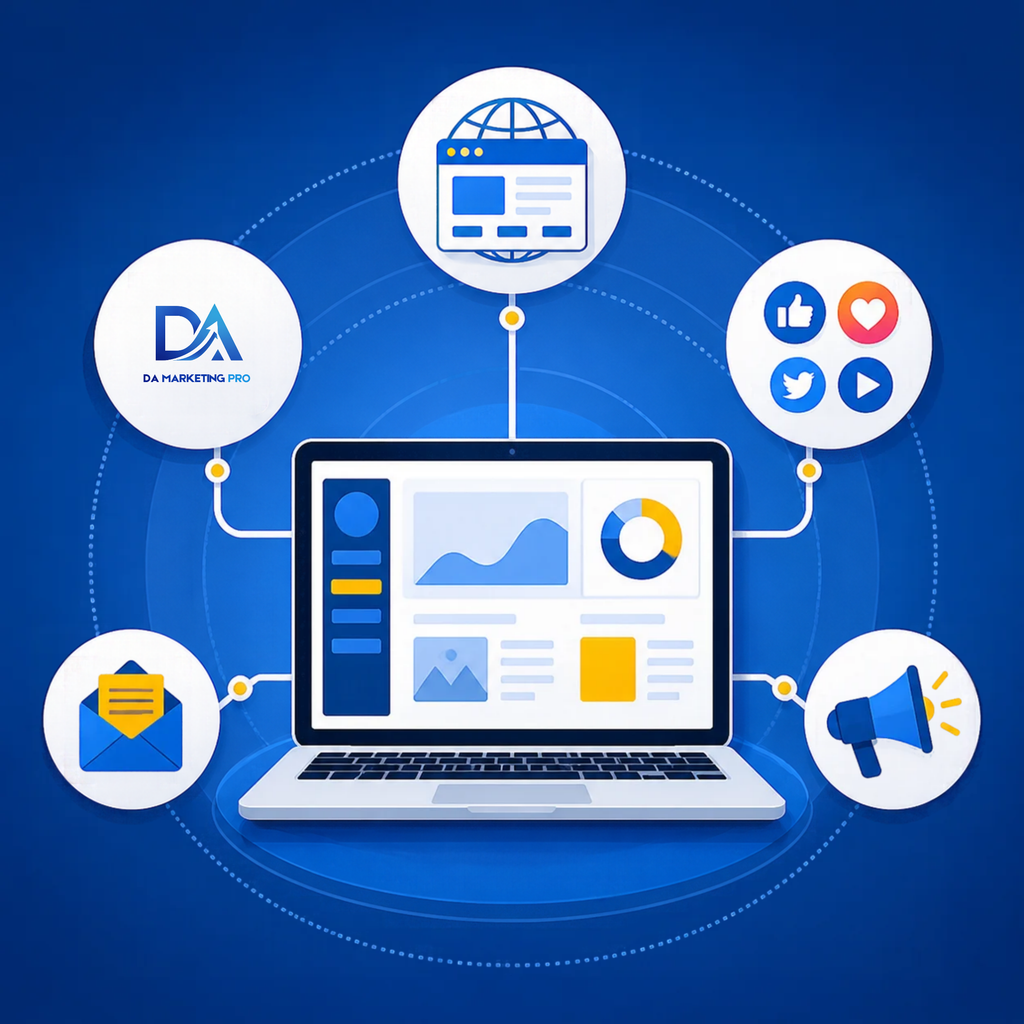
Digital marketing continues to play an important role in how businesses connect with customers. People increasingly use search engines, social platforms, websites, and online reviews when deciding what to buy.
- Reach more people: Businesses can connect with audiences beyond their local area.
- Target the right audience: Campaigns can be tailored to people based on factors such as interests, location, and online behavior.
- Measure performance: Analytics can help businesses understand traffic, engagement, leads, and sales.
- Build brand awareness: Consistent online content helps people recognize and remember a business.
- Manage marketing budgets: Businesses can select channels and budgets that fit their goals.
- Build customer relationships: Social media and email allow businesses to communicate with customers over time.
Digital marketing does not guarantee instant results. Success depends on the business’s goals, audience, strategy, budget, and consistency.
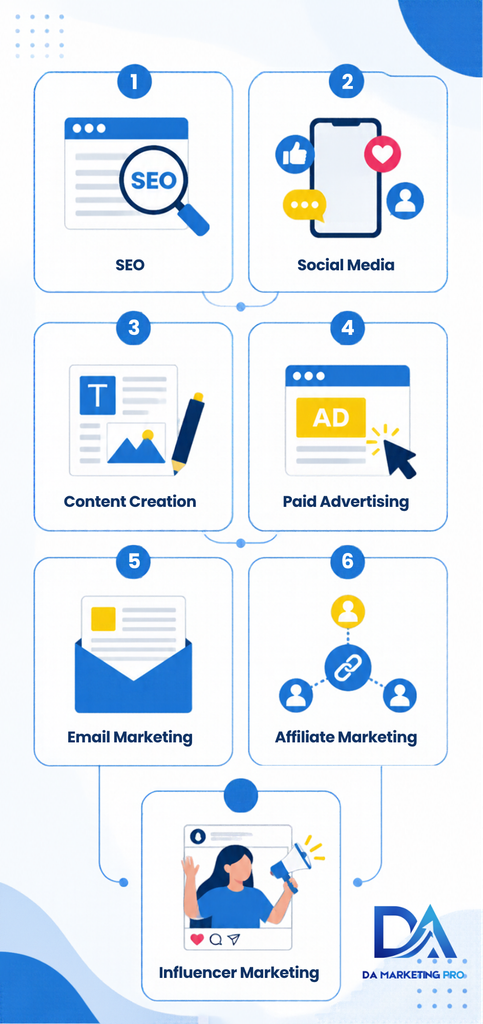
7 Main Types of Digital Marketing
1. Search Engine Optimization (SEO)
Search engine optimization, commonly known as SEO, is the process of improving a website so that its pages can appear more prominently in relevant search engine results.
For example, if someone searches for “best digital marketing services for small businesses,” a well-optimized website may have an opportunity to appear in the results.
2. Social Media Marketing
Social media marketing involves using platforms such as Facebook, Instagram, LinkedIn, TikTok, and other relevant networks to connect with an audience.
Businesses can share educational posts, short videos, product demonstrations, customer stories, and promotional content.
For example, a clothing store might publish outfit ideas on Instagram and use Facebook to announce new arrivals.
3. Content Marketing
Common content formats include:
- Blog articles3.
- Guides and tutorials
- Infographics
- Videos and reels
- Case studies
- Educational social media posts
For example, a digital marketing agency can publish a guide about improving a business website. This content can help readers learn something useful while introducing the agency’s expertise.
4. Pay-Per-Click Advertising (PPC)
Pay-per-click advertising is a form of paid online advertising in which advertisers generally pay when someone clicks on an ad.
Google Ads is one common example. Businesses can also run paid advertising campaigns on social media platforms.
PPC can help businesses reach a relevant audience more quickly than waiting for organic visibility. However, results depend on targeting, ad quality, competition, landing pages, and budget.
5. Email Marketing
Email marketing involves sending relevant messages to people who have chosen to receive communications from a business.
Businesses use email to share newsletters, helpful resources, product updates, special offers, and information about new services.
For example, an online store may send a newsletter announcing a new collection to subscribers.
6. Affiliate Marketing
Affiliate marketing is a model in which a person or business earns a commission for generating qualifying sales or other agreed actions for another company.
For example, a blogger may recommend a product using a tracked affiliate link. If a reader makes a qualifying purchase through that link, the blogger may earn a commission.
Affiliate marketing can help companies expand their reach while giving publishers an opportunity to earn income. Affiliate relationships should be disclosed clearly to readers.
7. Influencer Marketing
Influencer marketing involves collaborating with content creators who have an audience that may be interested in a brand’s products or services.
A skincare company, for instance, might work with a beauty creator to demonstrate how to use a product.
Businesses should choose creators based on audience relevance, trust, content quality, and campaign goals rather than follower numbers alone. Paid partnerships should be disclosed appropriately.

How Does Digital Marketing Work?
Digital marketing works best when different activities support the same business goal. A basic campaign can follow these steps:
Step 1: Set a clear goal. Decide whether you want more brand awareness, website visits, leads, or sales.
Step 2: Understand your audience. Learn about your potential customers, their needs, questions, and preferred online platforms.
Step 3: Choose the right channels. Select suitable methods, such as SEO, social media, email, or paid advertising.
Step 4: Create useful content. Develop content and messages that answer questions, solve problems, or explain the value of your offer.
Step 6: Measure performance. Review relevant metrics, such as website traffic, engagement, leads, conversion rates, and sales.
Step 7: Improve your strategy. Use the results to identify what works, adjust what does not, and test improvements.
Digital marketing is an ongoing process. Regular analysis and improvement can help businesses make better marketing decisions.Digital Marketing vs. Traditional Marketing
Both digital and traditional marketing can help businesses reach customers, but they use different channels.
| Digital marketing | Traditional marketing |
|---|---|
| Websites and search engines | Newspapers and magazines |
| Social media and email | Flyers and brochures |
| Online video and digital ads | Television and radio ads |
| Online analytics and tracking | Often relies on different measurement methods |
| Can target specific online audiences | Can reach broad audiences through offline channels |
Neither approach is automatically better in every situation. The right choice depends on the target audience, business goals, budget, and product or service.
Many businesses use a combination of digital and traditional marketing.
Benefits of Digital Marketing for Small Businesses
Digital marketing can give small businesses practical ways to compete and connect with customers.
Reach potential customers
A business website and social media profiles can help customers discover a business when searching for relevant products or services.
Build trust and credibility
Helpful blog posts, clear service information, genuine customer reviews, and consistent branding can help customers understand what a business offers.
Generate leads
A well-designed website can encourage visitors to contact the business, request a quote, book an appointment, or complete an inquiry form.

How to Start Learning Digital Marketing as a Beginner
If you want to learn digital marketing or offer it as a freelancing service, start with the fundamentals rather than trying to master every channel at once.
- Learn the basics. Understand target audiences, customer journeys, marketing goals, and the main digital marketing channels.
- Choose a starting skill. You could begin with social media management, content creation, SEO, or paid advertising.
- Practice with real projects. Build a sample content calendar, optimize a practice webpage, or create a mock advertising campaign.
- Learn useful tools. Explore tools such as Google Analytics, Google Search Console, Canva, and social media management platforms.
- Build a portfolio. Showcase sample work, explain your process, and present measurable results when you have genuine project data.
- Create your online presence. Publish helpful content on your website and make your services easy to understand.
- Keep learning. Digital platforms change frequently, so follow reliable documentation and continue practicing.
You do not need to learn every skill in one day. Focus on building a strong foundation and improving through consistent practice.
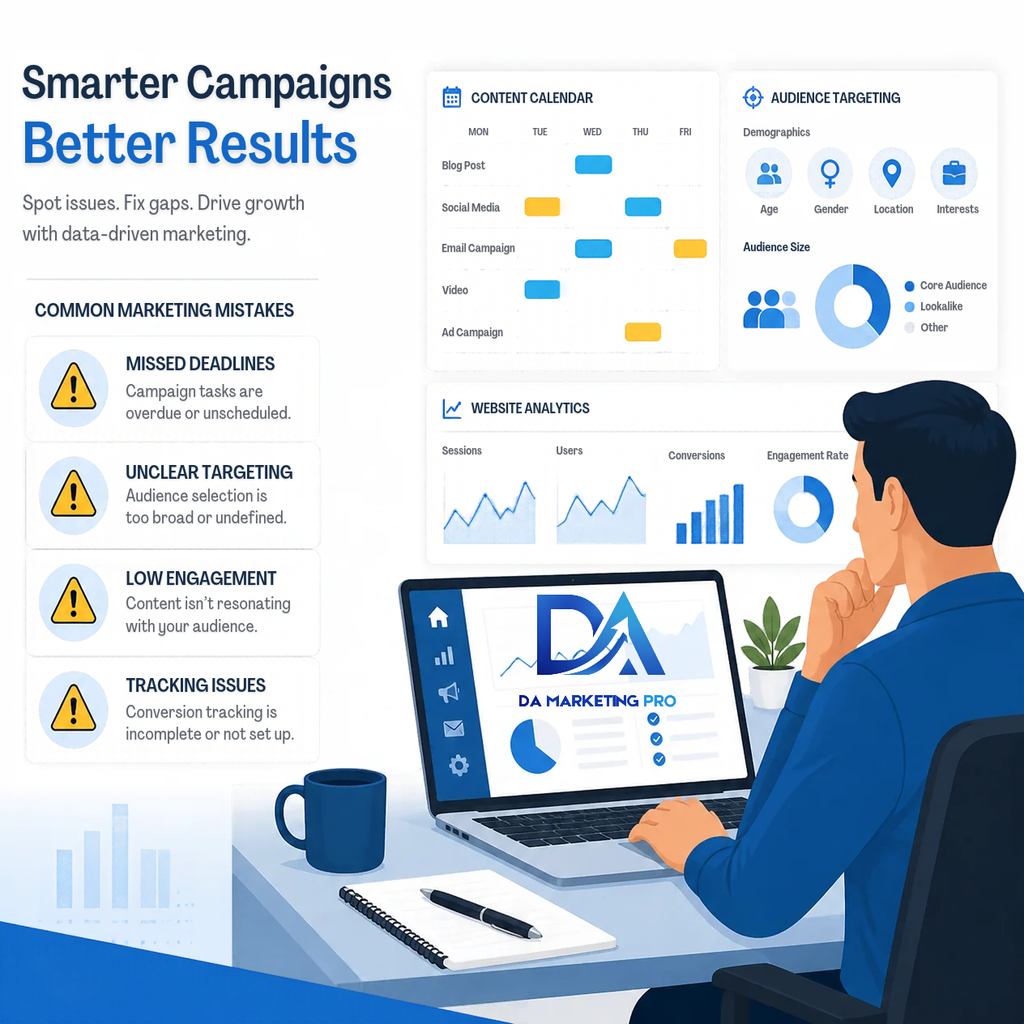
Common Digital Marketing Mistakes to Avoid
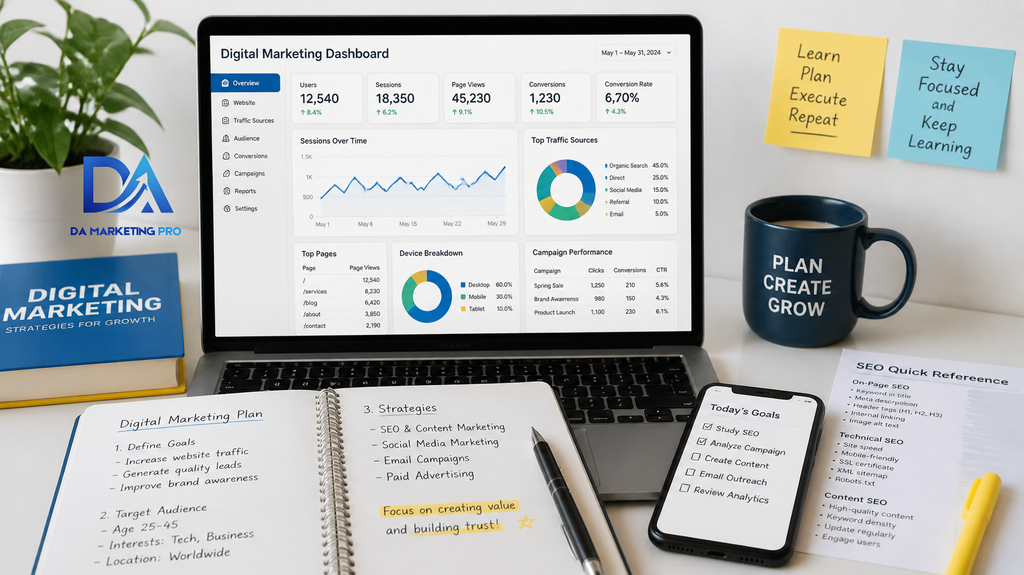
Beginners and businesses can waste time or money when they approach digital marketing without a clear plan.
Avoid these common mistakes:
- Trying to target everyone instead of a defined audience.
- Posting content without a clear purpose.
- Ignoring website usability and mobile visitors.
- Expecting immediate SEO results.
- Spending on advertising without defining goals.
- Focusing only on likes and followers instead of meaningful business outcomes.
- Publishing copied or unhelpful content.
- Failing to measure performance and make improvements.
A clear strategy, useful content, realistic expectations, and regular evaluation provide a better starting point.
Conclusion
Digital marketing is an important way for businesses to promote their products and services, connect with customers, and build an online presence.
Its main types include SEO, social media marketing, content marketing, PPC advertising, email marketing, affiliate marketing, and influencer marketing. Each method serves a different purpose, and the right combination depends on your goals and audience.
If you are a beginner, start by learning the fundamentals, choose one skill to practice, and build your experience step by step. If you own a business, focus on understanding your customers and selecting marketing methods that support your objectives.
At DA Marketing Pro, our goal is to help businesses understand digital marketing and explore practical ways to grow their online presence.
Ready to grow your business online? Explore our digital marketing services or contact us to discuss your business goals.
Frequently Asked Questions (FAQs)
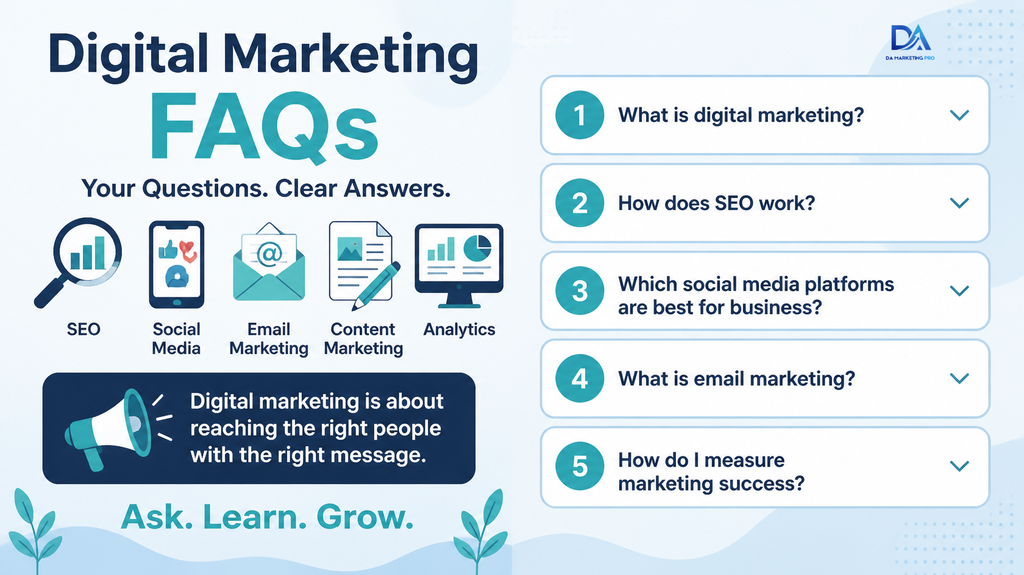
1. What is digital marketing in simple words?
Digital marketing is the promotion of products, services, or brands through online channels such as websites, search engines, social media, email, and digital advertisements.
2. What are the main types of digital marketing?
The main types include SEO, social media marketing, content marketing, PPC advertising, email marketing, affiliate marketing, and influencer marketing.
3. Is digital marketing a good skill to learn in 2026?
Digital marketing can be a useful skill for people interested in business, online communication, content creation, and freelancing. Opportunities depend on your skills, experience, portfolio, and the needs of potential clients.
4. Can beginners learn digital marketing?
Yes. Beginners can start with free learning resources, practice projects, and basic tools. Learning one area at a time can make the process more manageable.
5. How long does digital marketing take to show results?
It depends on the channel, competition, budget, and campaign strategy. Paid ads may generate traffic quickly, while SEO and organic content often require sustained effort over time. No specific result or timeline is guaranteed.
6. Do small businesses need digital marketing?
Digital marketing can help small businesses improve online visibility, communicate with customers, generate inquiries, and promote products or services. The most suitable approach depends on the business and its audience.
Leave a Reply